
Testing a New Product in NYC: What Brands Can Learn From a Real-World Launch
September 23, 2026
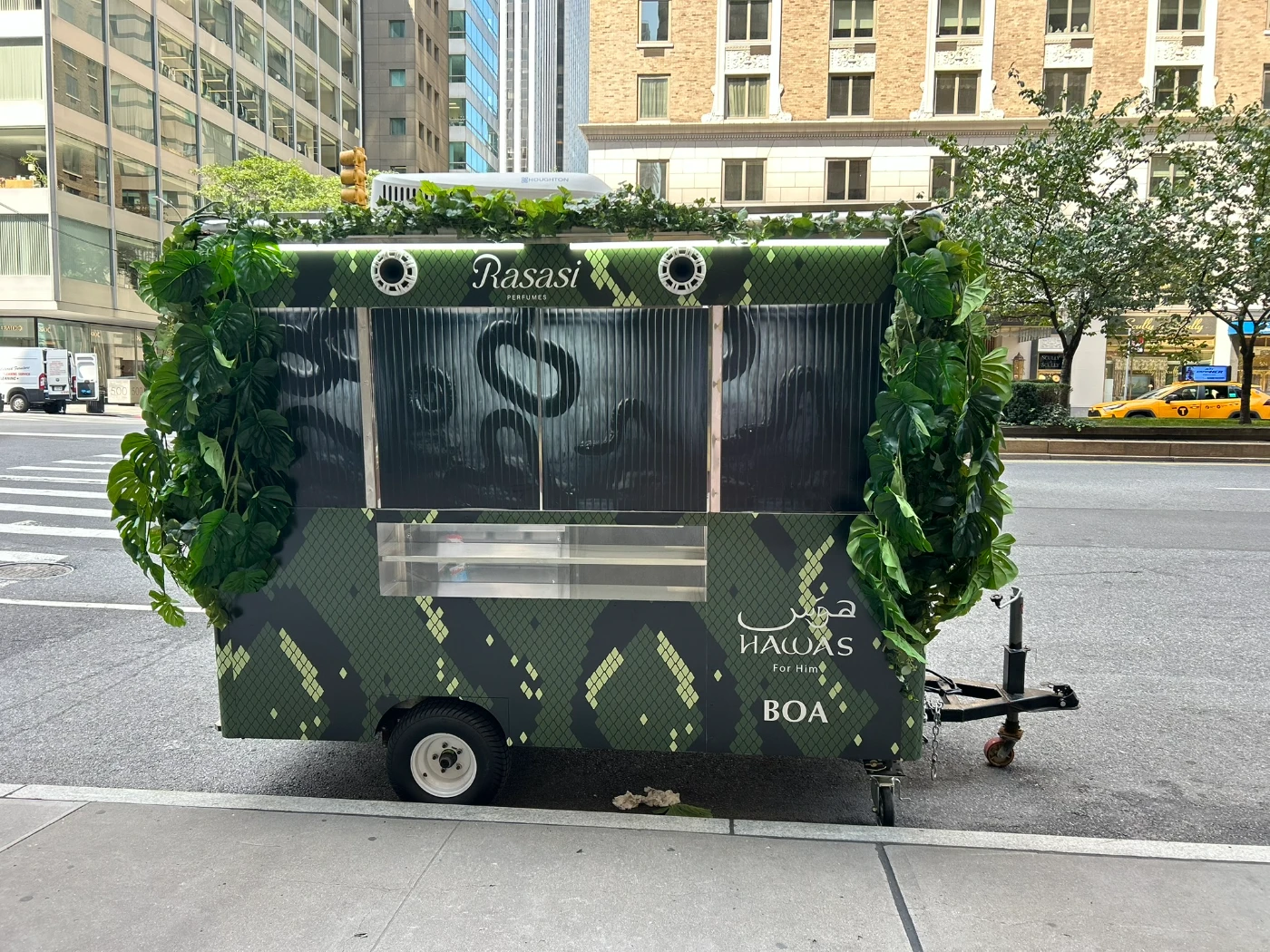
There are plenty of ways to test a new product before a larger rollout. Focus groups, surveys, e-commerce data, concept testing, and paid campaigns can all tell you something useful.
Then you put the product in front of actual people.
That’s when you start noticing things that are difficult to capture on a spreadsheet. Which product gets picked up first? What does someone ask before trying it? Which benefit catches their attention? Do they understand the packaging? Which variation runs out first?
A mobile product launch in NYC adds another dimension to that feedback. Instead of introducing a product in one fixed location, brands can use a mobile retail pop-up, glass-box truck, Sprinter, branded food truck, Citroën van, or another custom experiential vehicle to bring the same launch to different audiences throughout the city.
That mobility isn’t only useful for increasing exposure. For brands preparing for a larger rollout, it creates an opportunity to see how real consumers respond to the product, presentation, messaging, and experience before taking the campaign further.
A Mobile Product Launch Can Do More Than Generate Awareness
Most launch plans are built around what the brand wants consumers to know.
Once the doors of a mobile pop-up open, you get to hear what consumers actually want to know.
Those two things aren’t always the same.
Maybe your campaign leads with sustainability, but visitors keep asking about convenience. Your team may expect one flavor or color to be the obvious favorite, while another disappears twice as quickly. Perhaps consumers like the product but don’t immediately understand the packaging. Or the feature buried near the bottom of your messaging turns out to be the first thing people ask about.
A mobile activation puts your team close enough to the interaction to notice those patterns.
And because the activation can move, you’re not necessarily learning from one location or one type of audience for the entire campaign.
Take the Same Product to Different NYC Audiences
This is where a mobile launch becomes particularly interesting.
Imagine a new beauty product launching from a custom mobile retail pop-up in Manhattan. The product, displays, messaging, and overall experience remain consistent, but the campaign makes planned appearances in different parts of the city.
Consumers encountering the product while shopping may behave differently from people discovering it during the workday. A campaign timed around an industry event may generate more detailed product questions. Another stop might attract consumers who know very little about the category.
That doesn’t turn a few NYC locations into a scientific consumer study, nor should the results be treated as representative of the entire market.
What it can do is expose the brand to different real-world contexts while keeping the core activation relatively consistent.
If the same question, confusion, preference, or behavior keeps appearing across multiple stops, it’s worth paying attention to.
The Vehicle Gives You a Consistent Brand Environment
Moving a campaign between locations is only useful if the experience doesn’t completely change every time you move it.
That’s one advantage of using an experiential marketing vehicle for a product launch.
A glass-box truck can become a mobile showroom, with products merchandised inside a highly visible branded environment. A Sprinter can be customized for demonstrations, displays, or retail interactions. A Citroën van can support a more intimate product introduction or hospitality-led launch, while food trucks and carts can provide the right format for products built around tasting or sampling.
Brand Wagon can customize these vehicles with campaign graphics, displays, product merchandising, fabrication, and other elements so the brand environment travels with the launch.
You’re not recreating the activation from scratch at every stop. The product is still being presented within the same recognizable campaign environment.
That consistency makes it easier to notice when the audience or context changes the response.
Pay Attention to What People Do Before They Tell You What They Think
Consumer feedback doesn’t always arrive as feedback.
Sometimes it’s the product someone reaches for first.
Watch how people approach the vehicle. What catches their eye through the glass or from the sidewalk? Which display brings them closer? Once they’re inside or at the service window, where do they go first?
Then look at what happens around the product itself.
Do people turn the package over immediately? Compare two options? Ask the price? Bring a friend over? Does one item require repeated explanation while another seems to make sense without help?
For a mobile retail launch with several products or variations, those basic behavioral patterns can be informative.
If four products are displayed together, which gets picked up first? If you’re offering several samples, which disappears fastest? If the experience includes more than one demonstration or interaction, where do people naturally gravitate?
These observations won’t replace formal consumer research. They can, however, reveal questions worth investigating before the product or campaign is rolled out on a much larger scale.
Listen to the Questions Your On-Site Team Keeps Hearing
Marketing teams can spend months refining exactly how a new product should be described.
Consumers haven’t been in those meetings.
That’s useful.
The staff working a mobile activation are hearing reactions throughout the day. They know when visitors repeatedly ask how something works, where they can buy it, what makes it different, whether it comes in another version, or why a particular feature matters.
If the same question has been asked 40 times by mid-afternoon, the marketing team should probably know about it.
Pay attention to the language consumers use as well. They may describe the benefit differently than the campaign does or compare the product to something your team hadn’t considered.
Those conversations can identify areas worth revisiting in product descriptions, FAQs, retail signage, staff training, social content, or the next phase of the launch.
See Whether Your Messaging Works From the Sidewalk
A mobile product launch also puts campaign creative into a much less forgiving environment than a presentation deck.
Someone walking down a Manhattan sidewalk isn’t studying the copy.
They may give the vehicle a few seconds of attention before deciding whether to come closer.
That gives brands an opportunity to see whether the visual hierarchy and messaging make sense at street level. Can someone tell what’s being launched? Does the exterior give them a reason to approach? Once they arrive, do they understand what they’re being invited to do?
With a glass-box truck or mobile showroom, the product itself can become part of that first impression. Displays are visible through the vehicle, so the team can observe which products, visuals, or arrangements seem to pull people toward the experience.
If visitors repeatedly need an explanation before they understand what’s happening, that is useful information to have before reproducing the same messaging across a larger campaign.
Test More Than the Product
A mobile launch can also reveal how the surrounding retail experience performs.
Is the merchandising intuitive? Is there enough room for people to compare products? Does the packaging stand out when several items are displayed together? Does the demonstration take two minutes when you planned for 30 seconds? Is there a bottleneck at the sampling counter?
These details become particularly important when the activation is expected to travel.
After the first day or first stop, the team may realize that a display needs to move, instructions need to be clearer, staff need a different talking point, or the flow through the vehicle could be improved.
Because Brand Wagon’s mobile pop-ups and experiential vehicles are built around temporary campaigns, there may be opportunities to refine certain elements before subsequent stops rather than discovering the same problem at every location.
You don’t need to redesign the campaign every night. But you also don’t need to ignore something that’s clearly not working.
Build the Learning Into the Launch Plan
If consumer response is something you want to learn from, decide what the team should watch for before the vehicle hits its first stop.
Keep it manageable.
Maybe you’re interested in which product variation attracts the most attention. Perhaps you want to understand whether consumers grasp a new product category. Maybe the question is whether people respond to the value proposition you’re emphasizing or whether they consistently care about something else.
Brand ambassadors and other on-site staff can be briefed on the specific questions or behaviors worth noting, then debriefed at the end of the day.
That doesn’t turn the activation team into market researchers. If rigorous research is required, it should be designed and conducted appropriately.
What it does is prevent potentially useful patterns from disappearing at the end of a busy activation day.
Look Beyond Foot Traffic
A mobile launch naturally generates numbers.
Visitors. Samples distributed. Products sold. Leads. QR scans. Giveaway entries. Social engagement.
Those metrics matter, but they don’t always explain what happened.
Suppose one product sells considerably better than another. What were people saying about it? If the vehicle attracted plenty of attention but relatively few people entered, where was the disconnect? If one stop generated substantially more product questions than another, was there something different about that audience?
Combining campaign results with what Brand Wagon’s on-site team and the client’s team observed can provide a much richer picture of the launch than counting interactions alone.
Sometimes the useful discovery isn’t that everything performed exactly as expected.
It’s finding something you can improve before doing it another 20 times.
Use the NYC Launch to Improve the Next Stop
For brands planning a multi-city rollout, New York doesn’t have to be an isolated launch event.
It can be the first iteration of the campaign.
A Brand Wagon mobile retail pop-up or experiential vehicle can provide the physical framework for the NYC launch while giving the brand a chance to see the campaign operating under real conditions. What the team learns can then inform later stops.
Maybe product education needs to be simplified. Perhaps one display deserves more prominence. The staff briefing may need another talking point. A sample format could be easier to distribute. Or consumers may be responding to an aspect of the product that wasn’t originally central to the campaign.
Some findings will be NYC-specific. Others may be worth testing again in the next market.
The point isn’t to treat New York as a focus group.
It’s to avoid wasting the opportunity to learn while your product is already out there meeting consumers.
Planning a Mobile Product Launch in NYC?
Brand Wagon helps brands and agencies bring new products directly to consumers through mobile retail pop-ups, glass-box trucks, custom Sprinters, Citroën vans, branded food trucks, carts, mobile showrooms, custom fabrication, product displays, sampling, and complete experiential activations throughout New York City.
Our vehicles can be customized around the product and campaign, giving brands a consistent environment for product discovery while creating the flexibility to activate at planned locations and take the experience to different audiences.
Whether NYC is the entire campaign or the first stop before a larger rollout, we can help you build the physical experience and get it on the road.
Planning a mobile product launch in NYC? Schedule a consultation with Brand Wagon to discuss your product, campaign goals, and which experiential vehicle can bring the launch to life.
